

Recovery & Inflammation
Peptide Therapy for Recovery & Inflammation: BPC-157 and TB-500 in Belmont, MA
If you've ever wondered whether there's a way to bounce back faster from an injury, workout, or chronic ache without relying on more medication, recovery peptide therapy may be worth a conversation.
BPC-157 and TB-500 are two peptides some providers use to help support the body's natural repair process, potentially reducing inflammation and helping tissue heal with less downtime. For patients in Belmont and the surrounding Boston suburbs who have already tried rest, physical therapy, or over-the-counter anti-inflammatories without lasting relief, this category of treatment offers a different approach: one aimed at the repair process itself rather than just the symptoms sitting on top of it.
What Is Recovery & Inflammation Peptide Therapy?
Peptides are short chains of amino acids that act as messengers, telling specific cells what to do and when to do it. In recovery-focused protocols, certain peptides are used because they may signal the body to ramp up its own repair mechanisms at the site of an injury or an area of chronic inflammation. This isn't about masking pain; it's about supporting the underlying healing process itself. That distinction matters for patients who are tired of cycling through pain management options that never actually resolve the injury causing the pain in the first place.
Recovery peptide therapy is typically considered a complementary approach, meaning it's often used alongside physical therapy, structured rest, or a modified training plan rather than as a standalone fix. The goal isn't to replace the fundamentals of good recovery; it's to give the body additional support while those fundamentals are already in place.
How Do Recovery Peptides Work?
Rather than working like a typical anti-inflammatory that blocks pain signals, recovery peptides are thought to interact with growth factor pathways and blood vessel formation, known as angiogenesis, at the cellular level. In some patients, this may translate to faster tissue turnover, reduced swelling, and improved mobility in areas that have been slow to heal. The mechanism is different enough from a standard NSAID or corticosteroid that many patients use the two categories in different phases of recovery: anti-inflammatories in the acute phase to manage immediate discomfort, and peptides afterward to support tissue quality over the following weeks.
Because this approach works with the body's existing repair signaling rather than overriding it, results tend to build gradually rather than appearing overnight. Providers typically frame recovery peptide therapy as a multi-week commitment rather than a quick fix, which is an important expectation to set before starting.
Common Causes of Slow Healing and Chronic Inflammation
Slow healing and lingering inflammation can come from a number of sources: repetitive strain from training, an old injury that never fully resolved, age-related changes in collagen production, or inflammation that's become chronic rather than acute. Patients dealing with nagging tendon or ligament issues, post-surgical stiffness, or joints that seem to flare up with minimal provocation are often good candidates for a conversation about whether recovery peptide therapy fits into their plan. Identifying the underlying cause during a consultation helps determine which peptide, or combination, makes the most sense for a given injury pattern.
BPC-157: The Body Protection Compound
BPC-157 is a peptide derived from a protein found in gastric juice, and it's one of the most studied peptides for tissue repair. Some patients use it to support healing in tendons, ligaments, muscle, and even gut lining. It's often considered by patients dealing with nagging soft-tissue injuries, post-surgical recovery, or inflammation that hasn't responded well to rest alone. Because BPC-157 has been studied across such a wide range of tissue types, it's frequently the starting point for patients who are new to recovery peptide therapy and want a single peptide with a broad range of potential applications before considering a combination protocol.
TB-500: Supporting Flexibility and Tissue Repair
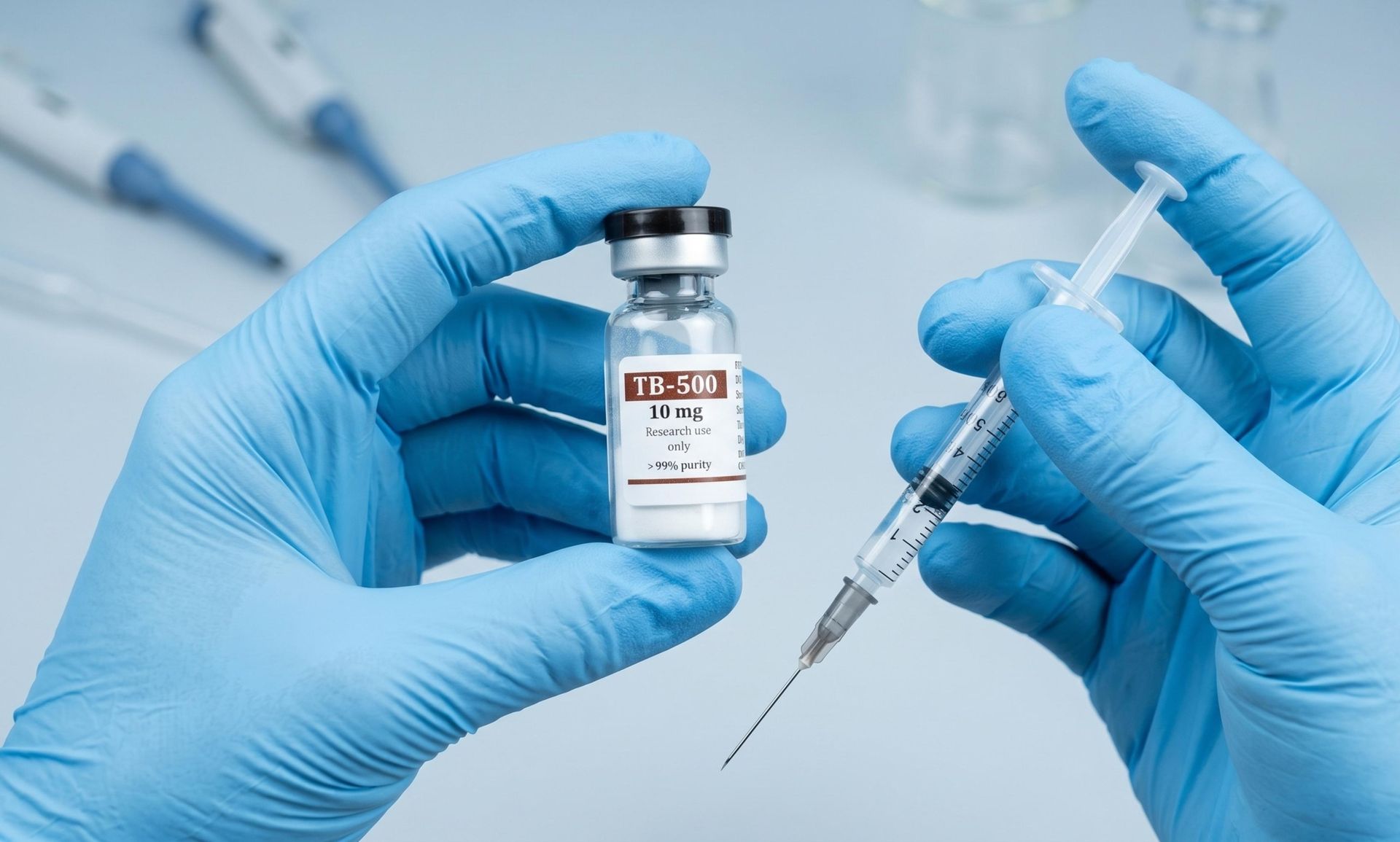
TB-500 is a synthetic version of a peptide naturally found in nearly every human and animal cell. It's frequently paired with BPC-157 because the two are thought to work through complementary pathways. TB-500 may help with flexibility, reduced scar tissue formation, and cell migration to damaged areas, while BPC-157 focuses on the repair signal itself. Patients recovering from injuries involving significant scar tissue, such as post-surgical adhesions or old muscle tears that healed with restricted range of motion, are sometimes directed toward a protocol that includes TB-500 specifically because of this scar tissue focus.
Combining BPC-157 and TB-500
While each peptide can be used on its own, many providers, including the team at The Luxe Dose, consider a combination protocol for patients dealing with more complex or longer-standing injuries. The reasoning is straightforward: if BPC-157 supports the repair signal and TB-500 supports flexibility and cell migration, using them together may address more of the recovery process than either peptide alone. Whether a combination protocol makes sense depends on the specific injury, its duration, and how the patient has responded to treatment so far, which is why this decision is made individually rather than applied as a default.
Who May Benefit from Recovery Peptide Therapy?
This category tends to appeal to active adults in Belmont, Waltham, and Lexington who train regularly and want to recover between sessions, patients managing a chronic overuse injury, or anyone recovering from a procedure who wants to support their body's healing timeline. It's also worth considering for patients who've noticed that injuries take longer to heal than they used to, which is a common and frustrating experience as the body ages. As with any treatment plan at The Luxe Dose, candidacy is determined during a one-on-one consultation rather than assumed based on symptoms alone.
What to Expect During Treatment at The Luxe Dose
Recovery peptides are typically administered via subcutaneous injection as part of a personalized plan built around your specific injury, goals, and health history. Bianca and her team will walk you through dosing frequency, expected timelines, and how to track your progress at your consult. From there, your provider will outline a proposed protocol, including which peptide or combination is recommended, expected duration, and what progress markers to watch for along the way.
Safety and What to Discuss With Your Provider
As with any peptide therapy, recovery protocols should be discussed thoroughly with your provider before starting, including any other medications or supplements you're currently taking, prior injuries or surgeries in the treatment area, and any underlying health conditions. Because these peptides are still an evolving area of clinical use, ongoing communication with your provider throughout treatment, rather than a single upfront conversation, is part of how The Luxe Dose approaches patient safety.
Recovery Peptide FAQs
Are BPC-157 and TB-500 the same thing? No, they're different peptides that are often used together because they may support recovery through different, complementary mechanisms.
How soon might I notice a difference? This varies by patient and the nature of the injury. Some notice changes in a few weeks, while chronic issues may take longer.
Is recovery peptide therapy only for athletes? Not at all. It's also used by patients managing everyday aches, post-procedure healing, or general inflammation.
How long does a typical treatment course last? Protocols vary based on the injury, but most are structured in defined cycles of several weeks with a reassessment afterward rather than continuous, indefinite use.
Can I combine recovery peptides with physical therapy? Yes. In fact, most providers recommend continuing physical therapy or a structured rehab plan alongside peptide therapy rather than replacing it.
Where to Go Next? If your recovery goals are tied to training or physique, you may also want to read our guide to Muscle Growth & Body Composition peptide therapy, since many active patients combine the two categories into one plan. Ready to see if this is right for you?